
Common risks of too much sun and how to stay safe

Here comes the sun! Vitality outlines some essential tips to stay healthy in the heat as temperatures ramp up

2025 is set to be a scorcher – with three heatwaves and a hosepipe ban already coming into force.
This means the good people of the UK are flocking to the great outdoors to catch some summer rays.
But with climates hotter comes increased risk of sunburn and other health implications as overindulgence becomes a common theme of the season.
So how can we make sure that we protect ourselves during these increasingly hotter seasons? And what are some of the risks associated with too much sun exposure?
Knowing your limits
It’s true that we do need the sun for our health. Vitamin D is an essential nutrient that our bodies need to keep bones, teeth and muscles healthy.
Not only that, it also helps to regulate the amount of calcium and phosphate in the body, as well as playing a role in your nervous system, musculoskeletal system and immune system.
Vitamin D mainly comes from the foods we eat and, you guessed it, sunlight.
“Each time strong sunlight hits your skin or eyes it causes a small amount of harm and your body can’t fix all of it”
Dr Yvonne Umebuani Beresford, Commercial Medical Director, Vitality
“We need some UVB to manufacture vitamin D and a bit of bright light is good for mood,” says Dr Yvonne Umebuani Beresford, Vitality’s Commercial Medical Director.
According to researchers from the University of Manchester, people with lighter skin types can get sufficient vitamin D with 10-15 minutes of sun exposure daily between April and September.
Meanwhile, 25 to 40 minutes is recommend for darker skin types.
Save your skin
According to Cancer Research UK, 17,000 cases of melanoma skin cancer in Brits are preventable.
The charity says this is due to the fact that 9 in 10 cases are caused by overexposure to ultraviolet (UV) from sunbeds or sunlight.
Overexposure to UV rays damages skin cells and puts people at higher risk of developing skin cancer.
Every time we experience sunburn – and anyone, no matter your skin type, can sunburn – our chances of developing melanoma and skin cancer increases.
Data from Vitality’s Health Claims Insights Report found that skin cancer was one of the most common cancer claims made amongst male and female members in 2023.
This was alongside other common cancers, including breast and prostate.
Umebuani Beresford points out that outside of the height of summer we can still suffer from sunburn.
Sound familiar, coming home from a day out when it’s overcast but you’ve got a pink nose?
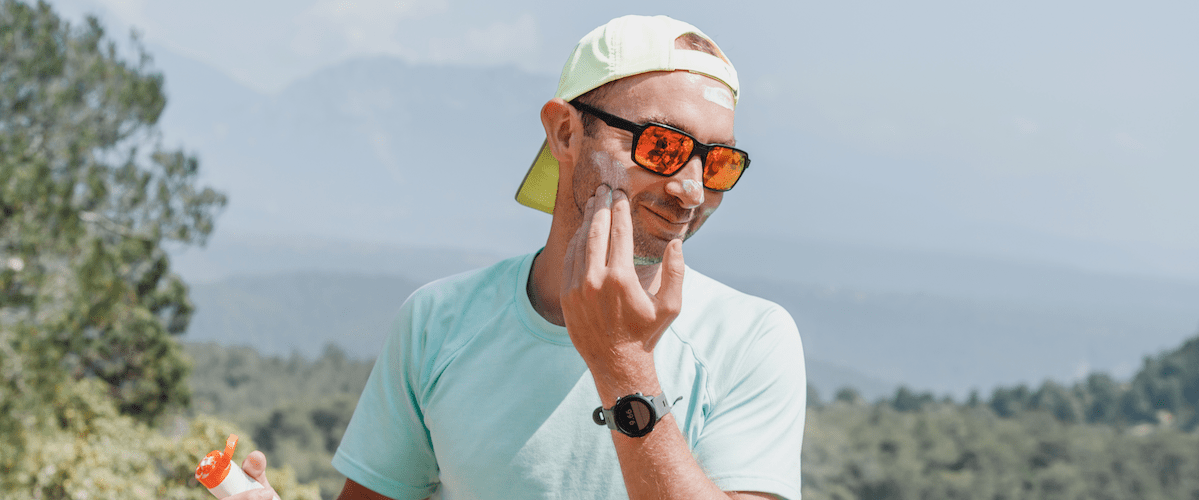
She recommends that from mid-March through to mid-October we should be taking precautions to protect our skin.
“The issue is when sun damage builds up bit by bit,” says Umebuani Beresford.
“Each time strong sunlight hits your skin or eyes it causes a small amount of harm and your body can’t fix all of it,” she explains.
“Over the years these small hits add up, raising the risk of skin cancer, cataracts and skin that looks older sooner than it should.”
If you have a Vitality health insurance plan and are worried about a mark or mole on your skin, you can access a cancer screening through our partner Check4Cancer.
This screening helps you to understand your potential risk of five common cancers, including skin, bowel, breast, prostate and cervical. All you need to do is log into Member Zone and visit Care Hub to get started.
Our members can also access a Skin Analytics Service to check a specific mole or mark. You just need to book a virtual appointment through the Vitality GP app and if needed, the Vitality GP can arrange for a Skin Analytics kit to be sent out to your home.
Not a Vitality member? Get a quote today.
Keep it covered
Spending time in the shade during the hottest part of the day is the best way to avoid overexposure to UV radiation.
The NHS recommends heading to a shady spot between 11am and 3pm when the sun is at its hottest.
It’s also a good idea to make sure we’re wearing suitable clothing, as appealing as stripping off might be.
Loose-fitting clothes that covers your shoulders are a good idea to keep the UV rays at bay.
It’s not a bad idea to wear a hat to keep the sun off your head and forehead.
All about eyes
Your eyes are 10 times more sensitive to UV damage than your skin, which means keeping them protected is imperative.
Repeated sun exposure to your eyes can cause a host of health implications, including cataracts and macular degeneration, where the central part of your vision becomes blurred.
Protecting your eyes with sunglasses is key to keeping your eyes safe from the sun.
However, just any sunglasses won’t do. Sunglasses that have the ‘CE Mark’, UV 400 label and/or 100% UV protection written on the label or sticker.
“A high UV index is classed as a risk to both skin and eyes, which is why good sunglasses matter,” says Umebuani Beresford.
Reapply, reapply, reapply
It’s not about SPF 30 anymore.
Skin care specialist Helen Dumbleton-Moore recommends applying SPF factor 50 on your face, come rain or shine, 365 days of the year.
“The most common mistake that people make is not reapplying suncream, especially on their face,” she says.
“People who wear make-up tend to not want to reapply, but there are so many SPF choices out there such as spray ones that can be applied on top of make-up.
“So, we really don’t have an excuse anymore.”She also notes that a broad-spectrum sunscreen that protects you from both UVA and UVB rays is essential.
Umebuani Beresford adds: “Experts say that an adult needs about six teaspoons for full body cover and a higher factor helps offset the fact that most of us under-apply.”
And don’t forget that, ideally, you should be applying sunscreen at least 30 minutes before going out in the sun.
Some things to look out for when buying and applying sunscreen:
- Make sure it has an SPF of at least 30
- Look for at least 4-star UVA protection
- Make sure it’s not passed its expiry date
-
Aim to apply 6-8 teaspoons of cream
If you want to do more to make sure you and your family are staying safe in the sun, the Met Office has set up a new Heat-health Alert system, alongside the UK Health Security Agency.
While initially set up for healthcare professionals in England, members of the general public can also set up colour-coded alerts in their local area, helping people to prepare and protect themselves during adverse weather.
.svg?rev=beee8ed27a30406c90f43e416683bd57&h=200&w=200&la=en&hash=BD6474559D7116C5D96470A6B9B1ECDD)
- Private healthcare from as little as £1.45 per day1
- Rated 5 Star by Defaqto
- Get healthy to earn rewards like Apple Watch
1 Price is based on the following criteria: a 35-year-old based in Peterborough, plan start date April 2025, Full Medical Underwriting, Consultant Select hospital option, £250 excess and £500 out-patient benefit and includes Insurance Premium Tax (IPT)
Recent articles

The fundamentals of sleep: Why quality rest is essential for your health
Sleep isn’t just ‘switching off’, it’s active recovery for your brain and body. New research drawing on more than 47 million nights of tracked sleep suggests that building consistent sleep habits could support long-term health in a big way. Here’s what quality sleep really means, why regularity matters as much as hours, and a few simple habits to help you wind down tonight


Why do we sleep? The science behind our need for rest
The truth behind why we sleep still baffles some scientists. However, with emerging research still shedding light on this after-dark phenomenon, new findings from Vitality have gone even further to show the physical and emotional benefits of a decent night’s kip


Power napping: Is it worth it (and how do you do it properly)?
Power nap or push through? A short snooze might be the reset your brain’s asking for – but only if you keep it brief. Here’s how to nap to boost energy (not grogginess), plus what Vitality’s latest sleep research says about why consistency matters
