

Could AI offer timely and effective mental health support to your employees?

At a time where poor mental health is impacting productivity at work, Dr Rishi Patel explains the crucial role AI could play in delivering timely and personalised guidance, alongside human care.

Artificial Intelligence (AI) is a topic that has become increasingly difficult for employers and employees to ignore.
For employers, conversations have largely focused on AI’s impact on productivity, job roles and the future of work.
But there’s another, often overlooked consideration: the role AI could play in supporting the mental health of employees.
The use of AI in healthcare settings
For many people, AI has made its way into everyday life, influencing the way that we shop, travel and access information, as well as at work.
In fact, according to analysis, in a one-month period 73% of the public said they used AI in their-day-to-day life[1].
While AI usage is becoming more common in daily life, there are still some concerns over its use in healthcare settings.
Particularly in the context of mental health support, it raises questions around the safeguards that are required to ensure it’s used effectively and appropriately.
These concerns ring true with Vitality polling which found that 52% of Brits believe that generative AI chatbots are unsafe and not regulated for mental health support[2].
Meanwhile, just 20% of respondents said that they trust AI chatbots to provide accurate and helpful mental wellbeing guidance[2].
The role of AI in supporting mental health
It’s clear that there are concerns around generative AI and it’s use in mental healthcare settings.
However, as AI becomes more integrated into our daily lives, it begs the question as to the role AI could play in supporting mental health, with the right precautions and guardrails in place.
“With the demand of mental health support, we are having to find new ways to meet people’s needs in a sustainable way, whilst delivering safe, timely and effective personalised care,” Dr Rishi Patel, Clinical Operations Director at Vitality.
While Dr Patel explains that it’s “not a question of AI or humans, but AI with humans”, AI can be useful to streamline early access and triage employees to get the right expert support where they need it.
The growing need for mental health support in the workplace
Dr Patel explains that the demand for mental health support is on the rise. The support needed in the workplace paints a similar picture, with staff increasingly struggling with their mental health.
According to Vitality polling, 15% say that they have taken time off due to poor mental health, with a further 25% considering taking time off[2].
While not all employees take time off, it’s still impacting those at work. In fact, almost two-thirds (61%) of workers of all ages report that poor mental health has affected their productivity, focus or output at work[2].
Providing a range of mental health support to cater to employee needs
Additionally, Britain’s Healthiest Workplace Report found that employees at risk of depression lose 151% more productive time on average[3].
It’s clear that, if left unmanaged, poor mental health can impact employee performance and have a significant impact on businesses too.
But, how can employers ensure they are providing the right support to their employees?
With five generations in the workforce – and each demographic having different needs – it’s crucial that employers have a broad suite of mental health support that meets colleagues where they are at.
Recent polling from Vitality found that:
- Gen Z are the least likely to feel comfortable speaking to a mental health professional (24%)[ 2]
- Gen Z are more open to speaking to anonymous online support than other generations [2]
- Older generations feel much more comfortable speaking to a mental health professional [2]
Younger employees may, therefore, be more open to accessing support from digital tools while, for older cohorts, speaking to a human expert may be the preferred choice.
For employers, being aware of these differing needs and preferences will be key to offering the right support.
Where AI can make a difference in mental healthcare for employees
As Dr Patel sees it, one of the biggest opportunities of AI lies in accessibility. For employers, AI could provide additional help for employees who are seeking quick access to mental health support.
“AI can provide scalable, early‑stage support, meeting people where they are in a confidential and non‑judgemental way and help to triage and direct them to the right care for their needs,” he explains.
For Dr Patel, AI is most effective when it’s embedded in existing care pathways, rather than positioned as a stand-alone solution.
“A hybrid model, which acts as a digital triage and clinical assessment, such as Vitality’s digital mental health pathway, powered by Wysa, allows AI to support clinicians and patients in a joined-up way.
“As these tools evolve, general-purpose chatbots will increasingly be able to safeguard, assess risk and signpost appropriately,” Dr Patel explains.
“Generative AI also opens up more personalised and immersive treatment options – such as VR and AR for trauma – and supports better matching of patients to therapies, clinicians and types of care, with the potential to support long-term outcomes,” he adds.
For employers, this could help provide more timely and personalised treatment options for their employees, enabling them to get more proactive care early on.
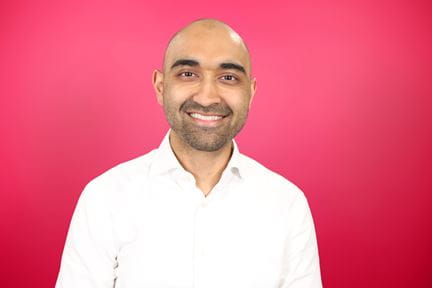
"It’s not a question of AI or humans, but AI with humans."
Dr Rishi Patel, Clinical Operations Director, Vitality
Why human therapists will continue to play a key role in mental healthcare
The Vitality polling highlighted key concerns around generative AI usage. For some respondents, added features could help to increase their trust in AI mental health chatbots.
Among those who said that added features would increase their trust, the strongest driver was the option to connect with a human expert when needed (47%)[2].
As Dr Patel explains, it’s about AI use alongside humans, rather than a replacement. In practice, he says this means:
- AI working alongside or behind human care
- Helping with triage, navigation or monitoring
- Reducing administrative burden
- Freeing up clinicians to focus on what they do best – building therapeutic relationships and delivering high-quality care.
When it comes to the role that human therapists will play in this hybrid model, Dr Patel says that it’s crucial to distinguish between general-purpose large language models and purpose-build, regulated AI tools designed specifically for healthcare.
“Purpose‑built systems – such as those offered through Vitality – are developed with defined clinical use cases in mind and are supported by evidence, training, governance and oversight,” Dr Patel explains.
"Crucially, these tools will always require human‑led clinical input. Purpose-built AI must sit within robust governance structures, with clinicians involved in design, oversight and decision‑making – often referred to as a ‘human‑in‑the‑loop’ approach,” he concludes.
[1] AI skills for life and work: general public survey findings, Gov.uk, January 2026
[2] Research was conducted by Opinium among 2,000 UK adults in April 2026
[3] 10 years of Britain’s Healthiest Workplace: the changing face of the UK at work, Vitality, 2025

Small Business Health Insurance in the UK
- Get fast access to healthcare for you and your employees
- Help your team get healthy – reducing sick days and healthcare costs
- Boost productivity with brilliant rewards from top brands
For companies with up to 249 employees – we can help your business perform at its best.
Recent articles

Tax on business health insurance explained
Read about tax on health insurance in the UK. What is a P11D form, what's benefit in kind and why are they important when getting company health cover.

Menopause Action Plans explained: What employers need to know
Ahead of World Menopause Day 2026, we spoke to Dr Mridula Pore, CEO and Co-Founder at Peppy Health, to find out more about Menopause Action Plans and what employers need to know.

‘Make it relevant’: how to ensure workplace wellbeing isn’t a ‘tick-box’
Vitality polling found that 52% of employees believe that their workplace health and wellbeing initiatives are little more than a 'tick-box' exercise[1]. Is the challenge a lack of wellbeing support or are the existing interventions failing to resonate with employees?