
Are your exercises age appropriate? Or is age just a number?

Not everything is age appropriate but that doesn't have to apply to our exercises. Whether it’s staying flexible into our 40s or sashaying into our 70s, here are some fitness routines fit for every age group

In order for any physical activity routine to be sustainable, first and foremost it has to be enjoyable.
However, often overlooked is that some types of exercise suit us better at certain life stages than at others.
Something that remains true throughout our entire life is that our exercise routines should always encompass cardiovascular exercise, strength work and flexibility.
The difference is to what extent we can achieve this as we get older.
To inspire you to hit all the right notes, Vitality Coach, Jonny Kibble, has laid out the activities that are best suited to you, depending on our age.
30s – Sweat, baby, sweat
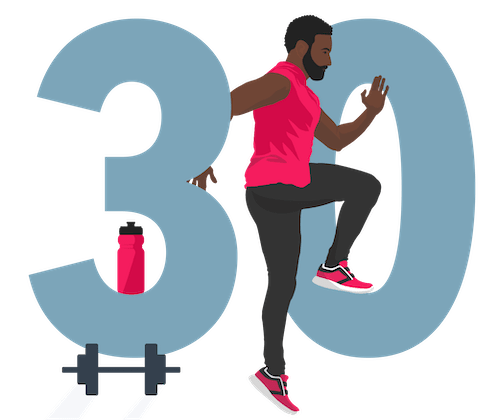
High-intensity interval training and short intense workouts are brilliant at this age.
Our 30s can be so busy with looking after young children, pets and/or progressing in our careers, so it helps if our training is time efficient.
Shorter workouts do need to be vigorous to be as beneficial as longer, more leisurely workouts, so high intensity intervals are a thirty-something's best friend.
Give this a try: four rounds of four minutes hard (8-9/10 effort) then three minutes easy sandwiched by a quick warm-up and cool down. You can complete this for running, swimming, cycling, walking up hill or any way you like.
40s – Feel the burn
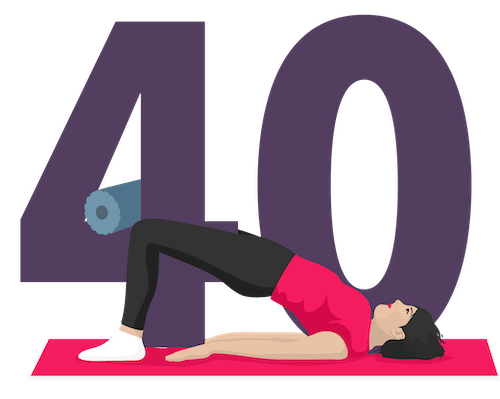
Core strength, mobility and flexibility are perfect to focus on in our 40s.
Common aches and pains tend to impact us more significantly at this time and building back core strength for postpartum might be a consideration for women, too.
Yoga, Pilates or even just some gentle stretching could help you here.
Flexibility work should be completed little and often, with five or more times per week being shown to give us the best results.
Be sure to hold each stretch for 30 seconds too to reap the rewards.
50s – Worth the weight
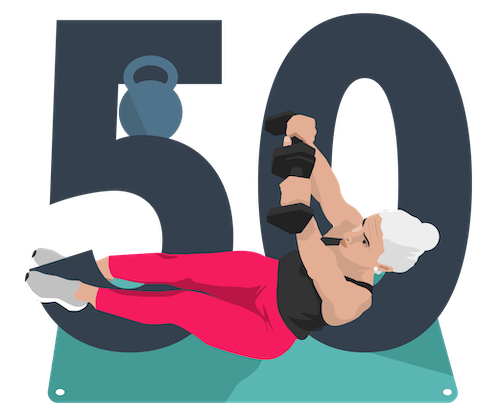
Strength training is important to do at any age as an adult, but especially in your 50s.
Sarcopenia (loss of muscle mass due to ageing) is something that’s important to prevent or slow. At this age, many women may be going – or have gone – through the menopause too, which can impact both muscle mass and bone mineral density.
These are things strength training can protect us against. Pick three-to-six exercises and complete these for two-to-four sets of eight-to-15 reps twice a week.
You can use weights, machines, or even just our bodyweight for this - just try to keep good form at the end of each set.
60s – Go green fingered
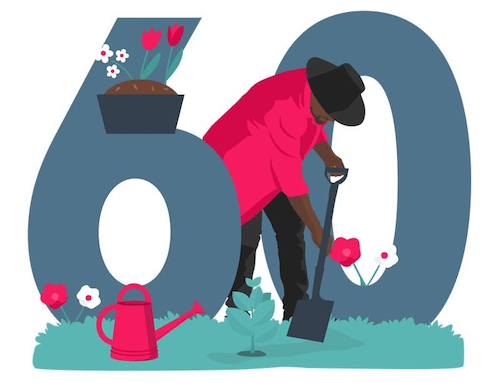
Gardening is good for all ages, and rightly so given its well-documented physical and mental benefits.
From decreasing symptoms of depression and improving mood to improved cognition and increased bone mineral density.
Gardening requires us to move in many different ways, raises our heart rate and requires balance. Getting outside in nature has huge benefits on our mental wellbeing too.
That being said, entering our 60s, and potentially retiring, can give us more time on our hands. This will naturally allow for us to tend more to our home space.
So, whether we’re tending to our garden or completing household chores, our body and mind will thank us for it.
70s – Sway your way
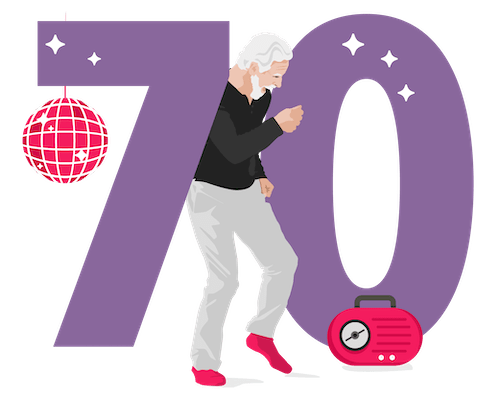
Dancing may not traditionally be thought of as ‘exercise’, but shaking our money-maker in fact has many benefits for older individuals.
Improved aerobic capacity, lower body strength and boosted bone mineral density are just some of the potential upsides to moving to music.
Dancing can also help keep coordination sharp and, if you’re dancing with others, there are social benefits too.
The low impact nature of dancing means it’s great for those in their 70s and it’s recommended for later ages too.
Even if it's joining a dance class a few times a week, or just moving in our living room, every little helps.
80s and beyond – Walk with me
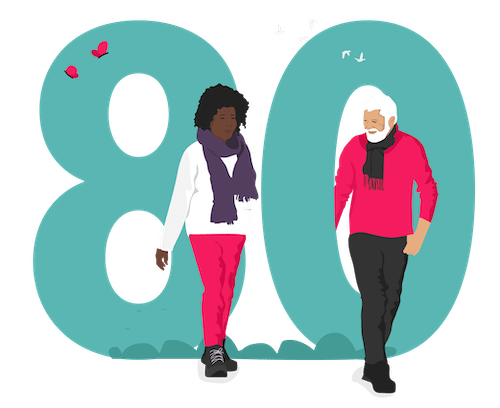
Many people in their 80s will be retired, but it’s crucial we stay active and strong to help us to live independently during later life.
Getting outside for a couple of walks, if possible, throughout the day is great, even if just around the garden.
A Saturday morning walk at parkrun could also be another good option if you're in this age bracket.
Maintaining functional strength as we get older means we'll find it easier to complete daily tasks as we age. If incorporated into our usual activities, even picking something up when sitting down – or reaching for something – a few times, with repetition, counts as a form of strength work.
Vitality members with health insurance and life insurance plans can earn activity points for running, walking and volunteering at a parkrun event.
Sign into your parkrun profile to link your Vitality account.
Recent articles

The fundamentals of sleep: Why quality rest is essential for your health
Sleep isn’t just ‘switching off’, it’s active recovery for your brain and body. New research drawing on more than 47 million nights of tracked sleep suggests that building consistent sleep habits could support long-term health in a big way. Here’s what quality sleep really means, why regularity matters as much as hours, and a few simple habits to help you wind down tonight


Why do we sleep? The science behind our need for rest
The truth behind why we sleep still baffles some scientists. However, with emerging research still shedding light on this after-dark phenomenon, new findings from Vitality have gone even further to show the physical and emotional benefits of a decent night’s kip


Power napping: Is it worth it (and how do you do it properly)?
Power nap or push through? A short snooze might be the reset your brain’s asking for – but only if you keep it brief. Here’s how to nap to boost energy (not grogginess), plus what Vitality’s latest sleep research says about why consistency matters

- Private healthcare from as little as £1.45 per day1
- Rated 5 Star by Defaqto
- Get healthy to earn rewards like Apple Watch
1 Price is based on the following criteria: a 35-year-old based in Peterborough, plan start date April 2025, Full Medical Underwriting, Consultant Select hospital option, £250 excess and £500 out-patient benefit and includes Insurance Premium Tax (IPT)