
What steps to take after a breast cancer diagnosis

The important thing to remember if you receive a breast cancer diagnosis is that you are not alone. Vitality offers support to help you navigate the journey ahead

Key takeaways
- Seek support and understand your diagnosis. Take time to process, lean on loved ones and ask your care team about treatment options and next steps.
- Prioritise mental and emotional wellbeing. Try accessing counselling, peer support groups and resources from charities, such as Macmillan and Breast Cancer Now.
- Plan for recovery and self-care. Set small goals, maintain healthy routines and stay vigilant with breast checks. Yvonne Umebuani Beresford, Vitality’s Commercial Medical Director explains what to look for.
Receiving a breast cancer diagnosis can feel like the ground is falling away from underneath you.
But while the road ahead might feel daunting, it’s important to know that support is available – and that outcomes are improving.
In the UK, thousands of people are diagnosed with breast cancer every year – and thanks to advances in treatment, support and early detection, more people than ever are living well after their diagnosis.
This article is designed to help you take the next steps with confidence during Breast Cancer Awareness Month.
It outlines what to expect from your care team, how to look after your emotional and physical wellbeing and where to find support.
Whether you’re newly diagnosed or supporting someone who is, we hope this guide offers clarity, reassurance and practical advice to help you move forward.
Remember: you are not alone
Being told you have breast cancer is life-altering and it’s normal to feel a mix of emotions: fear, confusion, sadness, even anger.
But it’s important to remember: you are not alone. In the UK, around 55,000 women and 400 men are diagnosed with breast cancer each year.
Vitality’s data shows that breast cancer is the leading cause of life insurance claims among women, accounting for nearly half of all claims in 2024.[1]
The first step is to give yourself space to process the news. Lean on loved ones around you and support groups.
Also, your GP, oncologist and clinical nurse specialist are there to offer you guidance every step of the way.
Understand your diagnosis and treatment
Once you have received your diagnosis, you’ll be referred to a multidisciplinary team of specialists, who will guide you through your treatment options.
This may include surgery, chemotherapy, radiotherapy, hormone therapy or targeted treatments – or a combination of these.
These people are there to help you navigate your diagnosis and explain the treatment options that are available to you.
If you have questions don’t be afraid to ask them as they are there for you and those around you, emotionally and practically throughout your care journey.
Read our chemotherapy support pack to help combat the side effects: Your chemotherapy support pack | Magazine | Vitality

Connect with others
Talking to others who have either been through or are going through a similar experience can be incredibly reassuring.
Outside of your clinical team and family members, there are support groups available that connect you and your loved ones with people who are going through the same process.
Charities like Macmillan Cancer Support, Maggie’s and Breast Cancer Now offer helplines, online forums and local support groups, which can give you first-hand information that you might not have received otherwise.
For example, people in England who have received a cancer diagnosis can apply for a certificate for free prescriptions. You can get an application form through your GP.
Other types of support offered can vary from talking to children about your diagnosis, practical tips on how to manage symptoms if you are menopausal, as well as help with money concerns.
You can read Debbie’s story below to find out how she benefitted from support groups.
Look after your mental health
A breast cancer diagnosis can be emotionally overwhelming.
It’s common to experience anxiety, depression, fear, and even a sense of isolation – especially in the early stages of treatment.
Looking after your mental wellbeing is just as important as managing your physical health, and there is support available to help you through it.
The NHS offers a range of mental health services, including counselling, cognitive behavioural therapy (CBT), and support groups.
If you are a Vitality member, you can also access a range of mental health support services to help you during and after treatment.
This includes therapy, physiotherapy and nutrition support.
Find out how Vitality helped member Nicky through her breast cancer diagnosis.
If you’ve recently been diagnosed with cancer or are worried about a potential cancer diagnosis, read our guide on diagnosis and treatment here: A Guide to Cancer Diagnosis & Treatment | Vitality.
Plan for life after treatment
Finishing your treatment for breast cancer might seem like something far in the distance, or you might be nearing the end of your care.
Either way, it is a major milestone. But this is not the end of the journey.
Adjusting to a new normal after a diagnosis can take time and be challenging, from managing side effects to the emotional recovery.
Planning ahead can help you feel more in control and supported as you navigate this new stage.
It can be helpful to set small, achievable goals, such as, if you’ve had time off, returning to work gradually, resuming hobbies or increasing physical activity.
By taking proactive steps and building health routines, you can support your mind and body for a fulfilling life after cancer.
Here’s a reminder of how to check your breasts from Yvonne Umebuani Beresford, Vitality’s Commercial Medical Director.
“If you know what’s normal for your breasts, you’ll be more likelyto notice changes that seem unusual,” she says.
Some of the changes you should look out for include:
- A change in the size or shape of your breasts
- A lump or an area of your breast that feels thicker than the rest
- Changes in skin texture, such as puckering or dimpling (similar to the skin of an orange)
- Redness or a rash on or around the nipple
- Any change to your nipple – including its shape, size or if it becomes pulled inward
- Liquid (not milky) leaking from the nipple without squeezing
- Persistent discomfort or pain in one breast or in your armpit
- A swelling in your armpit or around your collarbone
Debbie’s story
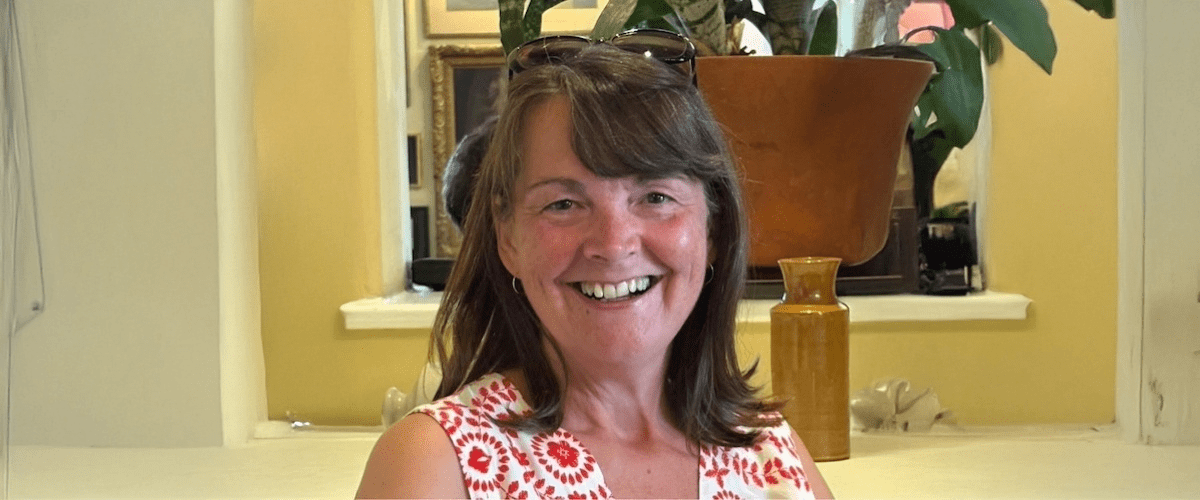
Vitality member Debbie did not receive her breast cancer diagnosis in the usual way.
Although she had no obvious symptoms, she sensed that something wasn’t right – and sadly, her instincts proved correct.
After being diagnosed, Debbie turned to her Vitality health insurance to begin her treatment plan.
It was an incredibly difficult time for her and her family, but she soon found comfort and support at her local Maggie’s Centre – a charity dedicated to helping people with cancer and their loved ones.
At Maggie’s, Debbie was able to connect with others facing the same challenges.
This sense of community, she says, was invaluable for both her and her husband, Richard, as they navigated the daunting reality of treatment.
“Being in a group of people who have all experienced very similar things, and being able to talk openly, makes such a difference. When someone says, ‘I know how you feel,’ you know it’s genuine,” Debbie shares.
Through Vitality, she also joined a private hospital support group for people living with a cancer diagnosis.
These sessions offered a safe space to have honest conversations about the impact of cancer, both during and after treatment.
“Those conversations were much, much deeper than just ‘How are you feeling?’” Debbie reflects. “They were about how life moves forward after what you’ve been through.”
Thankfully, Debbie has now come through the other side of her treatment.
Looking back, she encourages others facing a cancer diagnosis to seek out support – not just for themselves, but for their families too.
“You’ve got qualified counsellors, practical advice, and real help — even down to things like how to do your hair and make-up if you’ve lost your hair or appearance has changed from the effects of chemo,” she says.
“It’s important to know that life will change, but with these groups, you don’t have to go through it alone.”
[1] VitalityLife Claims and Shared Value Report, 2025
.svg?rev=beee8ed27a30406c90f43e416683bd57&h=200&w=200&la=en&hash=BD6474559D7116C5D96470A6B9B1ECDD)
- Private healthcare from as little as £1.45 per day1
- Rated 5 Star by Defaqto
- Get healthy to earn rewards like Apple Watch
1 Price is based on the following criteria: a 35-year-old based in Peterborough, plan start date April 2025, Full Medical Underwriting, Consultant Select hospital option, £250 excess and £500 out-patient benefit and includes Insurance Premium Tax (IPT)
Recent articles

The fundamentals of sleep: Why quality rest is essential for your health
Sleep isn’t just ‘switching off’, it’s active recovery for your brain and body. New research drawing on more than 47 million nights of tracked sleep suggests that building consistent sleep habits could support long-term health in a big way. Here’s what quality sleep really means, why regularity matters as much as hours, and a few simple habits to help you wind down tonight


Why do we sleep? The science behind our need for rest
The truth behind why we sleep still baffles some scientists. However, with emerging research still shedding light on this after-dark phenomenon, new findings from Vitality have gone even further to show the physical and emotional benefits of a decent night’s kip

Power napping: Is it worth it (and how do you do it properly)?
Power nap or push through? A short snooze might be the reset your brain’s asking for – but only if you keep it brief. Here’s how to nap to boost energy (not grogginess), plus what Vitality’s latest sleep research says about why consistency matters

- Private healthcare from as little as £1.45 per day1
- Rated 5 Star by Defaqto
- Get healthy to earn rewards like Apple Watch
1 Price is based on the following criteria: a 35-year-old based in Peterborough, plan start date April 2025, Full Medical Underwriting, Consultant Select hospital option, £250 excess and £500 out-patient benefit and includes Insurance Premium Tax (IPT)