
How physical activity can help manage your anxiety

Physical activity can improve many aspects of daily life, but what many don’t realise is how effective it really is. Vitality Magazine finds out for you

Key takeaways
- Physical activity can help reduce feelings of anxiety.
- Even a 10-minute brisk walk can improve mood and energy levels.
- Group activities can boost motivation and social connection.
- Setting realistic goals makes it easier to stay active.
- Exercise supports mental wellbeing but isn't a replacement for professional support.
Physical activity is one of the most effective ways to help manage anxiety.
Research shows that regular movement can reduce feelings of anxiety, improve mood and help people feel more resilient when dealing with everyday stress.
It can also support long-term mental wellbeing, with the Department of Health and Physical Activity reporting a 20%-30% lower risk of depression in adults who are active daily.
Whether it’s walking, running, cycling of taking part in group activity, exercise offers mental as well as physical benefits. Even short bursts of movement can make a difference.
Here, we explore why physical activity is such an effective way to combat mental challenges such as anxiety, and how to get started on your journey by using a few hacks along the way.
Quick answer:
Can physical activity help anxiety?
Yes. Physical activity can help manage anxiety by reducing physical tension, improving mood and giving your mind a break from stressful thoughts.
Regular exercise may also increase resilience and support long-term mental wellbeing.
What the evidence says:
- Research suggests regular physical activity can help reduce feelings of anxiety.
- Even a 10-minute brisk walk can improve mood and energy levels.
- Group activities may help reduce stress while building social connection.
What is anxiety?
Anxiety is one of the most common mental health challenges and that you are not alone if you suffer from it. In 2023, more than eight million people in the UK were experiencing an anxiety disorder.
Silvia Cordoba, Vitality Coach and mental health expert, describes anxiety as “a feeling that we can all feel at times, it may occur in response to a stressful situation and carry over after it has been resolved.”
Symptoms of anxiety can range from heart palpitations and difficulty breathing to lesser-known symptoms such as problems with digestion and even tinnitus (also known as ringing in the ears).
Anxiety can be thrown at us in many ways, often without us even recognising it. “Speaking to those around you, or to your GP, about the symptoms you’re experiencing can help identify and manage it,” adds Silvia.
How does physical activity help manage anxiety?
Before diving into the research, Vitality Coach and mental health expert Silvia Cordoba explains that physical activity can help manage anxiety by reducing tension, improving mood and increasing feelings of achievement.
“Physical activity releases endorphins, which are feel-good hormones that improve mood, increase motivation and our sense of achievement.”
Silvia Cordoba, Vitality Coach and mental health expert
Research by Harvard Health found that engaging in physical activity diverts your focus away from worries and stressors.
And, moving our bodies releases tension, which has been found to lower anxiety by increasing blood flow and neurochemicals (feel-good hormones, like serotonin).
“Physical activity releases endorphins, which are feel-good hormones that improve mood, increase motivation and our sense of achievement,” explains Silvia.
Even a small amount of physical activity, such as a 10-minute brisk walk, can increase our energy levels and help us interrupt negative racing thoughts.
Regular exercise also builds resilience to help fight against negative emotions and mental challenges that might present themselves in the future.
So, participating in events like parkrun – should you walk, run, or volunteer – is beneficial.
An independent survey found that 91% of people who completed a parkrun feel a sense of personal achievement, while 69% said their mental health was improved after attending a parkrun.
What type of exercise is best for anxiety?
There is no single best exercise for anxiety. The most effective activity is one you enjoy and can do consistently.
Examples include:
- Walking
- Running
- Cycling
- Swimming
- Yoga
- Dance classes
- Team sports
- Strength training
Regular movement is more important than intensity when building a sustainable routine.
How can I start exercising to help anxiety?
If you’re stuck on how to get started, ask yourself these three questions:
- What do I enjoy?
- How much time am I willing to put towards exercising?
- Can it be done in a group?
Most of us learn (sometimes the hard way) that there’s no silver bullet, and we shouldn’t expect drastic change overnight.
In the throes of his preparation for a 700km run across Iceland, Jamie Ramsay, an endurance adventurer, explains that he gets the most from exercise when he makes it part of his daily routine.
The former 9-5 man says that running is the “backbone” of his mental stability. “When I am running regularly, I can noticeably feel more order, structure and calm in my everyday life.”
Endurance runner or not, Jamie understands, just like any beginner, that getting started can be the hardest part: “A lot of people tell me that they find running too difficult […] but that is completely normal.
Sometimes I find the start of a run a serious uphill battle, but if you push on and let your body ease into it then it does become easier.”
Why setting a goal can help you stay active
This could be anything from setting an intention, or something you’d like to achieve by a certain time.
Adding your ‘why’ will not only boost motivation but add a sense of purpose and determination to what you do.
Abz Ali, social media influencer (@abzthedad) and proud Dad of four boys, is embarking on the 10-week Vitality 10k running programme. He shares: “Training for a 10k felt a bit daunting at first. Between work, family life and everything else, it’s easy to tell yourself you don’t have the time.
“But starting small has made all the difference. Even a short run or walk helps clear my head, and having something to aim for gives me a reason to keep showing up.
“I’m not chasing a perfect time, I just want to feel fitter, calmer and proud that I’ve stuck with it.”
Jamie says that by setting a goal like this, it can encourage you to stay motivated.
He says: “Having something to aim for gives you that extra desire to get out there, whether it be a race or challenge with a friend.
“One trick I used when training for big runs was to use a treadmill every now and then and have a boxset that I was only ever able to watch when running.
“The desire to find out what happened next in Dexter got me to the gym day after day.”
Can exercising with others help anxiety?
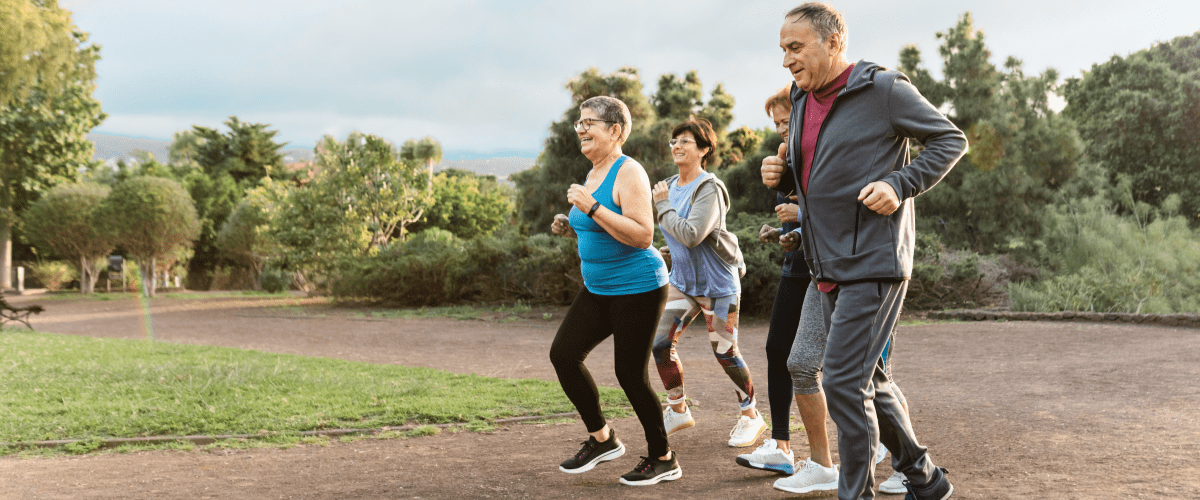
Being a part of a team sport or group physical activity is an opportunity to make new connections with people and has been found to reduce stress more than doing it alone.
“Having more people around can be a great way to stay motivated and make you feel a part of something,” says Jonny Kibble, Head of Physical Activity at Vitality.
Joining an activity like parkrun is a great way to start from a place where it feels comfortable, achievable and everyone is welcome – friends and family alike.
Finding what’s right for you will ease any pressures or worries you might be feeling.
The way we talk to ourselves (or our inner voice) combines conscious thoughts with unconscious beliefs, which creates mind chatter that we experience throughout the day.
Often, we can find ourselves steering our thoughts towards negative talk. By introducing positive self-talk and affirmations – or positive statements to help overcome negative thoughts – we can reframe situations in a way that helps motivate us and feel happier.
Repeating self-affirmations and positive self-talk can feel a bit strange to begin with, but if you stay consistent, research suggests positive self-talk can improve motivation and self-confidence.
What if I exercise but I still struggle with anxiety?
It’s also true that people who exercise regularly also struggle with their mental health, and no one is immune to it.
At the height of his career, Vitality Ambassador and rugby legend, Jonny Wilkinson, suffered from mental health challenges, and is a staunch advocate for mental wellbeing.
Speaking in an interview with Vitality earlier this year, he said: “There’s a misrepresentation that winning will bring you ultimate joy or ecstasy.”
For Jamie, though, trying fresh things and setting new challenges is one way to make sure his running is still working for him. “Life can get difficult and sometimes your daily [exercise] isn’t enough to give you the escape you are looking for.
“When this happens to me, I try and shake up my running and seek new routes in more beautiful places and on different surfaces.
“Also, if I feel that my running is not being as beneficial as I want, then entering a trail race often helps.”
He concludes: “It gives me something to focus on in my training and adds the extra boost I need to bring the focus back to my running, and away from the stresses of everyday life.”
Physical activity won't eliminate anxiety altogether, but it can be a powerful tool for improving mental wellbeing.
Whether you begin with a short walk, a local fitness class or a structured training plan, small and consistent steps can have a meaningful impact on how you feel.
.svg?rev=1b479782b87e4ea5b8b9a56cc1ce48c2&la=en&hash=5EB0674413B6A649AC48890D97DFBD05)
At Vitality, we encourage our members to make small positive lifestyle choices that make a big impact. That’s why we offer partner benefits and rewards through the Vitality Programme.
Find out more by downloading the Vitality app or visit vitality.co.uk.
Recent articles

How to support someone going through menopause
From help at home to a more conducive workplace, here’s how to give someone you know going through menopause a little extra love and understanding.

Your running race day essentials
The event is almost here! Make sure everything goes to plan by packing these essentials, so that you feel prepared, confident and ready to run

3 healthy autumn recipes for comforting seasonal meals
From a colourful squash stew to a lighter shepherd’s pie and warming chicken noodle soup, these satisfying autumn recipes make seasonal eating simple
- Private healthcare from as little as £1.45 per day1
- Rated 5 Star by Defaqto
- Get healthy to earn rewards like Apple Watch
1 Price is based on the following criteria: a 35-year-old based in Peterborough, plan start date April 2025, Full Medical Underwriting, Consultant Select hospital option, £250 excess and £500 out-patient benefit and includes Insurance Premium Tax (IPT)