
How to help your child cope with back-to-school anxiety

As the time goes to repack their school bags, Vitality Magazine offers caregivers some advice on how to alleviate back-to-school anxiety

Last-minute scrambles for stationary and late-night hemming are a tell-tale sign that the back-to-school season is upon us. And while it’s an incredibly stressful time for parents, children are also feeling the pressure.
Almost two-thirds (65%) of UK children admitted to feeling nervous and stressed because of school, with anxiety topping the list as the most prevalent negative emotion at almost 40%.
Dr Sophie Mort, Clinical Psychologist and Mental Health Expert at mindfulness app and Vitality partner Headspace, explains that separation anxiety, academic pressure and expectation to take part in extracurricular activities can trigger anxiety among children.
“Understanding these factors can help parents support their children, and ultimately help them find strategies to cope with it effectively,” she tells Vitality Magazine.
She also reminds parents that “overcoming back-to-school anxiety is a gradual process and each child may respond differently.”
While it is normal for children to feel some form of stress or anxiety – sadly, it’s part of everyday life – there are ways for caregivers to help children cope with the symptoms.
Fall-out from the pandemic
Lessons over Zoom and mask-wearing in schools might firmly be in the rear-view mirror, but a study by the Institute for Fiscal Studies and UCL’s Institute for Education found that nearly half (47%) of children’s social and emotional skills worsened during the pandemic, which, in the long term, could have lasting impact.
“The pandemic resulted in several issues affecting young people including worries about their learning and development due to school shutdowns, loneliness due to social distancing and restricted activities such as sports/clubs,” explains Dr Roshane Mohidin, Vitality’s Head of Health Improvement and NHS GP.

“Reports on the pandemic’s effects on children and adolescents have found that 30% of young people reported a negative impact on their mental health with 16% of adolescents reporting low life satisfaction[1],” he adds.
“Researchers have also found some evidence of worsening symptoms amongst children with pre-existing mental health issues.”[2]
Meanwhile, Dr Selina Warlow, a Clinical Child Psychologist, who is based at the Nook Clinic, told The Times that since lockdown there has been a rise in disorders, from anxiety and depression to OCD and eating disorders in young people.
How do I know if my child is anxious?
Yetunde Bankole, Vitality’s Lead Mental Health Coach, identifies common symptoms of anxiety in children as difficulty sleeping or waking in the night with nightmares, persistent tummy aches or headaches.
“They may also want to avoid certain situations, changes in their appetite, fatigue; you may notice increased irritability or separation anxiety and bed-wetting,” she adds.
However, these signs and symptoms should be considered alongside what you already know about your child, which can “give you an accurate picture and rule out any other possible causes,” says Yetunde.
What can I do to help?
Back-to-school anxiety can be completely normal after the school holidays, explains Dr Roshane. “During the summer holidays, children spend a significant period of time at home with their family where they feel more comfortable[3].
“In addition, they have had some time away from the school environment where they may have felt more pressure in relation to challenges with learning or interacting with other children.”
That being said, feelings of anxiety can continue to persist. This might mean that you need to offer more support to your child.
Dr Sophie recommends the below to help ease anxiety:
- Develop a routine - start slow, and gradually transition kids into a school routine a few weeks before school starts, as this will help with getting up on time.
- Open communication - Ask your children how they are feeling about heading back to school and talk through any concerns they might have.
- Talk about their goals - encourage them to think about what they want to achieve this academic year, for example, are there any new hobbies they want to try?
- Be a role model - model a positive attitude towards learning and school, as children often mimic their parents' behaviours.
- Practise self-care - caregivers also need to set time aside to take care of their own wellbeing. Find ways that work for you to manage your own stress levels and to create a calm and supportive environment for your child.
Don’t forget, it’s ok to experience anxiety
It’s important to remember that, like adults, children can feel anxious from time to time, and it is a normal part of growing up.
Some children, however, can feel more anxious depending on their nature and environment, while others can be more affected by scenarios to trigger anxiety.
For example, separation anxiety is the most common anxiety disorder in children younger than 12 and more commonly developing phobias, while social anxiety is more prevalent in older children.
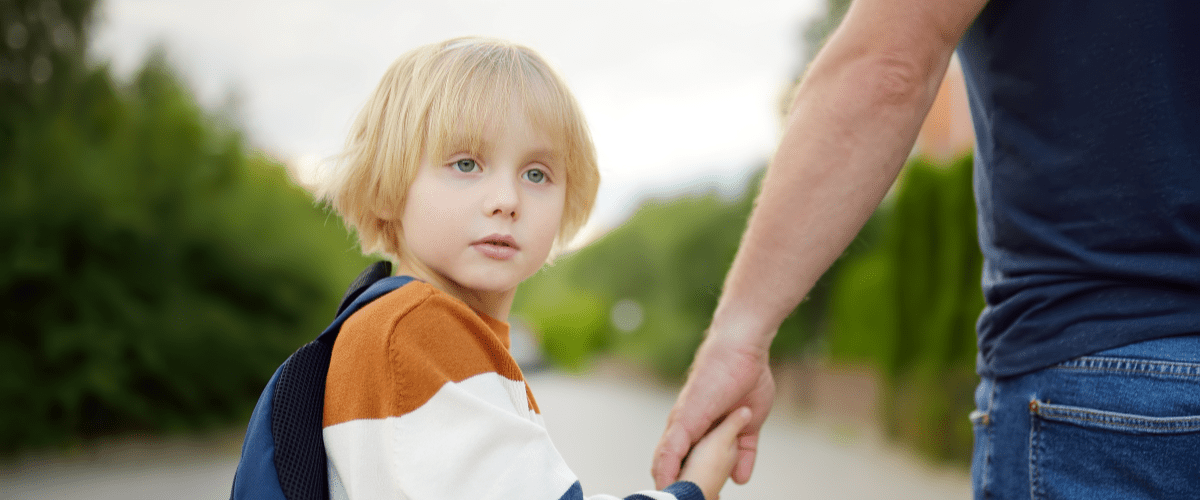
Yetunde concludes by saying that if you do want to try and tackle your child’s anxiety, you must listen to them.
“Try not to interrupt them, show empathy which involves connecting with a part of yourself that can identify with what your child is feeling, ask questions if you’re unsure about something they’ve said,” she notes.
“It can be difficult for a parent or guardian to hear that something is worrying their child, but do not panic outwardly, sometimes we can project this panic which further worries the child.
Just remember, with the right tools and support, anxiety can usually be managed.

Get qualifying Vitality insurance and enjoy 12 months of Headspace on us.
If you're already member, open the Vitality UK member app to view the benefit.
Recent articles

The fundamentals of sleep: Why quality rest is essential for your health
Sleep isn’t just ‘switching off’, it’s active recovery for your brain and body. New research drawing on more than 47 million nights of tracked sleep suggests that building consistent sleep habits could support long-term health in a big way. Here’s what quality sleep really means, why regularity matters as much as hours, and a few simple habits to help you wind down tonight


Why do we sleep? The science behind our need for rest
The truth behind why we sleep still baffles some scientists. However, with emerging research still shedding light on this after-dark phenomenon, new findings from Vitality have gone even further to show the physical and emotional benefits of a decent night’s kip

Power napping: Is it worth it (and how do you do it properly)?
Power nap or push through? A short snooze might be the reset your brain’s asking for – but only if you keep it brief. Here’s how to nap to boost energy (not grogginess), plus what Vitality’s latest sleep research says about why consistency matters
